Copse and robbers

More ramblings about the Forestry Commission sell-off I’m afraid. What has intrigued me about this new policy (one incidentally not in either the Lib Dem or Tory manifesto) is the absolutely half-arsed way the government have gone about trying to defend it. Any attempt to paint it as a fiscally driven initiative ceased rapidly- the sell-off will make little money. It has become rapidly clear that it’s an ideologically driven policy, a classical liberal/libertarian abhorrence of any involvement of the state in an area where the ‘market’ could apparently make a better job. Caroline Spelman has flagged up the tension between the FCs role as regulator of the British forestry industry, as well as a major commercial contractor, yet never satisfactorily explains why this should require the selling off the forestry estates rather than simply setting up an independent regulator (Off Plank?)

This issue is important, for several reasons. First, of course, our forests are important cultural and natural resources and not simply financial seams to be mined. However, it is also a lens through which we can better understand the problems with the condem ‘big society’ agenda and its promotion of free market alternatives to all forms of state activity. In theory, the ‘big society’ is a wonderful notion, right up there with motherhood and apple pie, but it’s stymied by the friction of reality. Of course, people should get involved with their communities and take responsibility for things. However, just because people get involved in making decisions, does not mean that there are the resources to make these decisions actually happen. If the government really wants to see the ‘big society’ happening, we would be seeing them investing in funding schemes aimed directly at the voluntary sector, we would be seeing initiatives to provide community groups with training in employment law, health and safety, and writing business plans. If they were serious, we would see them ring fencing local government funding for voluntary groups. If they really wanted this to work, we should see increased funding to bodies like English Heritage and the Citizens Advice Bureaux. We would see them working with insurance companies to provide subsidised insurance for community events. Instead, it is precisely these kind of funding streams that are being cut at every turn – it is not surprising that Liverpool has withdrawn from being one of the pilot areas in the ‘big society’ project, citing lack of funding as one of the key obstacles. Support the ‘big society’ by all means, but don’t expect it to also save money. Let Cameron support choice, but let’s see him stump up the cash to pay for the decision-making process and to fund the choices once they have been made.

We also see with the woodlands sell-off the weakness of the market. Whilst for the Tory’s the freeing of the market is the ultimate panacea to all our woes, by saying that they will embed safeguards regarding conservation and public access in the long-term forestry leases, they are explicitly acknowledging that a completely free market won’t meet these needs without an element of compulsion. If the free market is so perfect why do we need child labour laws and health and safety legislation? Why do we need OFWAT, OFCOM and the Office of Free Trade? Commission, the Office of Fair Trade, OFWAT and OFCOM? Why do banks need bailing out? Because, simply, the results of a truly free market leads inevitably to a lot of sheer bloody misery for a lot of people and huge financial rewards for a minority. One only has to look at the periods in British history when the market was probably at its freest, the mid-19th century, to also see a period where child labour was at its highest, pollution was at its worst and the most industrial deaths and injuries occurred. We could equally turn to areas of the developing world today, where existing legislation over sweatshops are often not enforced, to see the incredibly poor conditions endured by workers. The free market may be the best way of making money, but, banally obvious as it may seem, there is more to life than money. The frustrating thing is that the government clearly realise this themselves. If they really wanted to follow the small state theory to its obvious conclusions, then they should seek to remove all immigration control and abolish the army and replace it with contracts with commercial security firms such as Blackwater. Of course, they won’t, because they too recognise that there are limits to the efficacy of the market,and by following its inexorable logic leads to socially unacceptable conclusions . However, rather then entering into a real debate about where the limits of the state are and how to recognise them, they blithely assert that the state is bad thing and the market a good thing without ever exploring why.

postscript

If ever I feel a need to get really angry and shout at things, there is nothing like a brief listen to Radio 4’s Any Questions to get me suitably splenetic. Only caught a couple of minutes this evening, but that was enough to leave me in a foul mood. Its worth listening to the odious (and looking at his blog, deeply self-pitying) James Delingpole purely for the opportunity to throw heavy objects at your radio.

The Woods and the Trees

The CONDEM proposals for selling of forests owned by the Forest Commissions have attracted, quite rightly, a lot of opprobrium, with particularly concern expressed about the potential threats to both the natural and cultural heritage connected to British woodland. The latest versions of the proposals appear to show some governmental concessions to these widely expressed worries. However, it is still clear that they don’t seem to ‘get it’ and here is why:

First of all, forests are dynamic things. This is an obvious and banal statement; of course they are living ecosystems. The crucial issue, though, is the fact that the vast majority of British forests are actively managed. They haven’t achieved their current state through being left to ‘get on with it’; they are the result of a long period of monitoring, management and control by humans. Like the majority of the British landscape, woodlands and forests are not simple natural landscapes, they are cultural products. It is incredibly important not lose site of this for two reasons. First, it has direct implications on how forests are looked after; they can’t simply be left to grow, they require continual investment in time, money and expertise for them to flourish. Secondly, a clear acknowledgement of this is important to avoid any accusations that those of us who have concern about the current policy are dewy-eyed mystic tree huggers with an obsession with a quasi-mythical wildwood (populated no doubt by Robin Hood, Herne the Hunter and possibly Bambi).

This is where the government’s proposals about forests hit their first snag. Whilst saying that many forests will be sold off to commercial companies, they are keen to promote their inchoate ‘Big Society’ agenda, with the proposals that a significant number of forests should be sold off to local community groups (under the Community Right to Buy provisions in the planned Localism Bill). We can take as read the implicit assumption that despite the recession there are lots of community groups out there with the initial capital to invest in the purchase of a wood (the consultation document is clear that any sale would be at the commercial market price and that the local groups simply have the option of first refusal- woodland costs c £3,500 and £7,000/hectare, so an average side wood could cost c £300,000). We can also pass over the assumption that there is an endless stream of volunteers and enthusiasts who are ready to get involved in running the forests (if not a zero-sum game, the size of the volunteer community is far from elastic). The biggest worry is the assumption that a small group of enthusiasts can easily run a wood. It takes more than committee meetings to actively run and maintain even a moderate sized wood. They need to be worked on and looked after. This includes felling dead wood, planting new trees and maintaining the infrastructure (drainage, fences, gates etc). Add to this, the need also to research, understand and curate any elements of the ecosystem (protected plants, animals etc) or the historic environment. This is going to involve money, time and expertise. There is no indication where this money is going to come from, nor the expertise. The planned massive expansion of the ‘big society’ is clearly going to put immense amount of pressure on existing funding sources (e.g. the Historic Lottery Fund and charitable bodies) who are unlikely to see a massive expansion in their own resources to meet this challenge. Equally, at the very time as all these new community groups are going to need professional advice, the bodies that provide them, including local government (e.g. rights of way officers, county archaeologists etc), quangos (e.g. English Heritage) and charities are facing massive cuts themselves. These forests are living organisms. They are going to require management and investment on an on-going basis year after year after year after year, long after the relatively short-term financial gains made by flogging them off are made. Are those community groups who purchased the woods in the first place even going to be around in ten years time? One only has to look at the number of local community initiatives funded by the HLF that have withered and died to realise that such groups often have a relatively life-span, usually relying on the drive and enthusiasm of often a very small group of individuals. The consultation documents states states that if the local group was wound up, the forest would return to the control of the State, presumably then to be sold to the commercial sector and leaving the community. This lack of appreciation of how forests work is disturbing and is symptomatic of a resounding short-termism.

Overall, according to the consultation document, the forests which might be available for management by local groups total about 13,000-26,000 hectares (c. 5-10% of the Forestry Commissions holdings). Another chunk of forests are what they call ‘forests of national historical, biodiversity or cultural significance’ (e.g. the Forest of Dean, New Forest) these might potentially be managed by charities (rather than smaller community groups) on a trust or lease-hold basis – forests potentially to be treated this way comprises a total of 50-80,000 hectares (c.20-30% of the FC holdings). Again, the same problems apply (funding etc), as well as some potentially interesting issues of governance (e.g. what would the relationship be between, for example, the New Forest National Park authority and a charity running the related woods, although, to be fair, the NPA could presumably bid to run the woods). These charity-run woods would have greater obligations to maintain the woods for public access etc. As with the smaller woods, they could apply for Forestry Grants, but there is an explicit assumption they should move away from reliance on state aid (how?). There are finally ‘commercial forests’ which would be leased to the private sector. These would have far less restrictions about public benefit (although there would be some) – key example given of this is Kielder Forest, and over all commercial forests make up a total of c35-50% of the FC holdings.

Whilst it is clear that some forest areas, particularly larger areas of ‘ancient woodland’ have some particular public importance, I am a little worried about the notion that it is possible to separate out some important forests in this way. Some elements within a landscape may not be of particular antiquity, but nonetheless contribute significantly to the character of a particular area. With this in mind, I was more than a little surprised to see that Kielder Forest in Northumberland is classified simply has a ‘commercial forest’/ Whilst in terms simply of antiquity it does not compare to the Forest of Dean, nonetheless, it defines its surrounding landscape, and although very much a working forest, it is of far greater significance to that part of the country than simply an economic one. It dates back to at least the 1920s and there will be increasingly fewer people who remember that area as anything but wooded. Kielder Forest is as essential to local distinctiveness in central Northumberland as the New Forest is to south-west Hampshire.

So, all in all, there are still real problems with the proposals. Let’s be clear, forests need to be managed and a major element of this management is best carried out in a commercial context. Also, there is nothing inherently wrong in the selling off of some elements of the Forestry Commission portfolio on a periodic basis in order to rationalize the estate, if balanced by a more or less equal level of purchasing more threatened forests to protect them. However, the current proposals, seemingly driven by an ideological move towards ‘localism’ and a short-termist demand for immediate capital, fail to address some very real problems. Currently, by operating a mixed portfolio of woodland the Forest Commission can use profits from commercially dominated woodlands to fund and manage forests with greater public / environmental benefits. By splitting up the estates the government are simply offloading the costs of running the woods with a greater public benefit onto a community with a limited capacity and a no secure source of financial support.

Folkwaves

I’ve just found out that Radio Derby are axing their excellent Folkwaves programme. This is a copy of the email of complaint I’ve sent

I’ve just found out about the plans to scrap Folkwaves on Radio Derby, and I’m deeply saddened. It seems perverse to end one of the UKs most popular folk music programmes at a moment when British (and particularly English) folk music has never been more popular. Indeed, I found out about Folkwaves ‘ fate on the same day that BBC4 broadcast an excellent documentary about English folkdance introduced by Mercury Prize nominated Rachel Unthank- and then followed it up with a programme about clog dancing presented by Charles Hazlewood who regularly broadcasts on Radio 2. Both programmes I note were selected as weekly tv highlights by the national press. To turn your back on a burgeoning local and national folk scene seems frankly bizarre. Folkwaves has been highly successful in building a loyal local audience, but also thanks to Listen Again/I-Player an expanding national (indeed international) audience. Whilst I understand that the radio station has an initial loyalty to local audiences, it is a shame that it is failing to capitalise on this wider listener base and see it as a chance to spread knowledge and interest in the region to a wider listenership. It is a regrettably parochial decision. Even in local terms it is sad. We have seen in recent government policy an increasing emphasis on localism and locality (something echoed in many initiatives of recent years, such as the Heritage Lottery Fund). We are also seeing increasing cuts to arts funding, which has been a great financial support to the folk music scene. So in this time of increasing calls for the ‘big society’ coupled with critical attacks on national support for the arts, it is frankly rather odd that this is the moment that Radio Derby decides to end a programme that has done more than anything to nurture and encourage local and regional traditions. I would urge you to reconsider your decision; the end of the Folkwaves is a sad indictment of Radio Derby

British archaeology on the ropes?

An important article from Nature highlights the threats to British archaeology from the results of the recession.

Archaeology is being hit by a three-way whammy: the economic recession is causing a collapsed in commercial archaeology, the withdrawal of state funding from a wide range of areas as part of the CONDEM cuts agenda, and a threat to universities due to the changes in direct government funding for Higher Education and a reduction of funding available via the Research Councils; Dr Mike Heyworth, Director of the Council for British Archaeology has characterised this as a ‘perfect storm’.

There are a lot of issues worth exploring here, particularly the wider impact of changes to Higher Education (I’ll try and talk about these later). However, I think most significant threat is from the underlying rhetoric about the state withdrawing from funding services, with Cameron’s nebulous notion of the ‘Big Society’ (aka ‘the tooth fairy’) co-ordinating itself to replace, through voluntary service, the state-shaped hole in provision of support for the historic environment.

I am profoundly uneasy about this recourse to the ‘Big Society’ to cure all ills.

First of all, whilst the belief in the unending stream of volunteers is very touching, one has to question where all these individuals are going to come from. If we are all being asked to give up time to support core services (education; health; welfare etc) there will be a greater pressure on the limited corps of ‘willing enthusiasts’. Anybody who already has something to do with local community groups or societies already knows that there is not an endless source of volunteers. There are undoubtedly many keen and enthusiastic members of the community who engage in a wide range of dedicated and committed ways with archaeology and heritage. However, their numbers and time are limited. There is an even greater shortage of people who are willing and able to take up the organising and administrative roles. It is these often boring and unexciting admin jobs (chairman; secretary; treasurer) that keep local volunteer groups going. It is ironic that one of the first things to be axed by EH is their outreach team.

Secondly, again, whilst there is a huge amount of experience, knowledge and specialist skills out there in the amateur community, there is always going to be a need for them to be supported by professional specialists. For example, whilst many local societies have keen field walkers, excavators and documentary researchers, they may lack access to conservation skills (and equipment), geophysical kit (and experience) etc etc; there are also many ‘soft’ skills which aren’t widely available in the amateur sector (e.g. understanding the manifold delights of writing MORPHE compliant project designers, detailed knowledge of planning law). For a vibrant amateur community to work, it has to work in partnership with an enthusiastic professional sector. However, the three main arms of professional archaeology (Local Government; Academic; Commercial) face real challenges – particularly Local Government, where much of the co-ordination and involvement with local groups occurs. As looks likely, if the function of Local Government Archaeology is being reduced right down to simply providing planning advice, the first thing to go in terms of service provision will be precisely the time/resources to facilitate this kind of much-needed partnership working with local groups.

I agree with Mike Heyworth that its great that the HER network has been expanded over the last 10 years, but these are living databases, they need to be updated constantly (many HERs already have significant backlogs) and time is needed to deal with enquiries. Currently, these incredibly important research resources are open to the public and researchers (of all levels) and are not simply treated as planning tools. However, how long will this stay the case when Local Government administrators pressure County Archaeologists to maximise income and limit unnecessary work? Even the increasing move to on-line HERs is not the answer- huge amounts of data is held in parish files/’grey literature’ – and they still require curation and updating.

It is encouraging that funding for the Heritage Lottery Fund will increase in future years; however, given the ‘cuts’ agenda, there is also likely to be a massive increase in applications – potentially to fund services that had previously been funded through core budgets. HLF funding also has limitations- it is primarily project based, it won’t pay for the year on year provision of basic services or facilities. It is great for initiating work, but not so good at keeping things going when times are tight.

There are many other challenges – I am broadly keen on the move towards localism, but how will Housing Minister Grant Shap’s proposals to get rid of planning law when it comes to local housing developments in rural villages affect archaeology, for example? What will be the implications of the proposals to privatise the Forestry Commission on our ancient woodland? What will be the impact of the huge cuts to DEFRA in conserving and maintaining historic landscapes? If we want to support a ‘local’ agenda, we need to ensure that those in administrative jobs have the detailed and intimate knowledge of local heritage to allow local needs to be effectively developed within an environment that takes on board the idiosyncratic nature of local landscapes and needs- however, it is precisely this kind of knowledge held by people who have spent year’s working in their local area that will disappear following the threatened staff cuts. Once that knowledge is gone, it is not easy to get back. Of course, some will continue to work in an amateur capacity out of their love for the subject, but it’s a harsh lesson to be told that you are expected to do for free, what you were once paid to do…

I would agree with Reuben that much of this cut agenda is ideologically driven; although I know that many would argue against that perspective. However, whether one sees this slash and burn policy as a necessary evil or politically motivated carnage, what worries me profoundly is the sheer short-termism of the way it is being handled, with a lack of communication, lack of any visible succession planning or real sense of the long-term impact.

The Imagined Village

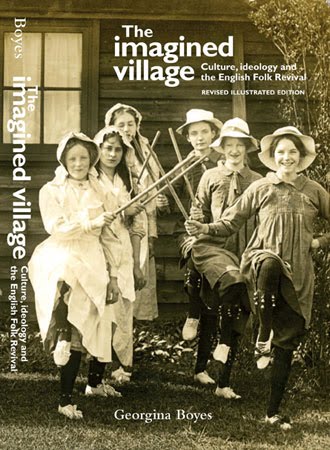
Pleased to see that Georgina Boyes’ seminal book The Imagined Village: Culture, Ideology and the English Folk Revival has been re-issued. Very interesting stuff (if still showing the scars of being based on a PhD thesis…). This book developes some of the earlier ideas put forward by Dave Harker’s book Fakesong: The Manufacture of British Folk Song, 1700 to the Present Day, which critiqued the Sharpian folk-song revival of the early 20th century, arguing that it was essentially that the notion of a ‘folk tradition’ was a creation of a bourgeois group of middle class collectors. To quote from the blurb from The Imagined Village “Alongside this, however, runs the analysis that The Folk” themselves were a convenient fiction. They and their culture were created and used in the cause of conflicting ideologies – including the Women’s Suffrage movement and British Fascism. Issues of Englishness, class and creativity are all dealt with in this fascinating and controversial history of the Folk, who existed only to sing and dance in an Imagined Village.” Ut is worth pointing out that this critique has itself been subjected to a more recent critique- a good review of the debate can be found here

Folky stuff on the web

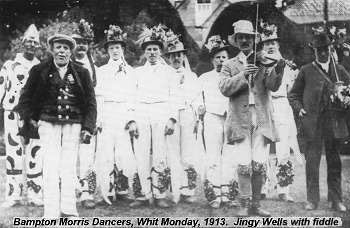
A couple of folky discoveries on the internet. First, the British Library has a fantastic collection of ethnographic field recordings of world music- much of which is on-line. In general, there is more Africa and Asian material than European music. However, its great to see a good collection of traditional music and song from England – for example, there are some good field recordings of Oxfordshire morris, particularly from Bampton. Its not all just English material; for example, there is good stuff from the Irish immigrant communities, particularly from London, such as this version of Matt Molloy’s Reel and other tunes, recorded in The Favourite in Holloway. Nor is it very ‘trad’ stuff- I like the recording of ex-POWs singing ‘Abdul Abubbul Amir’

I’ve also been meaning to mention Jon Boden’s new project A Folk Song A Day, which as the name suggests is a blog providing a new recording of a traditional song every day for a year- its only been running since the end of July and there is already some cracking stuff on it, such as good version of Polly Vaughan (though I do like Jim Moray’s recent version) and a nice video of Bold Sir Rylas and Canadee-I-o (which most people will know best through the music of Nic Jones)

Museums and the CONDEMS

Last week David Cameron gave a lovely heart-felt speech all about how the UK has been not promoting its touristic charms effectively. He argues that the significance of England’s heritage had been underplayed by the previous administration: “”The last government underplayed our tourist industry. There were eight different ministers with responsibility for tourism in just 13 years. They just didn’t get our heritage. They raided the national lottery, taking money from heritage because it didn’t go with their image of ‘cool Britannia’,” (which is quite a fair point). Certainly museums and galleries boosted the UK’s economy by £1bn last year. However, the irony is that not that long before making this speech Cameron’s “bonfire of the Quango’s” saw the abolition of the Museum, Libraries and Archive council by 2012; with the Culture Minister considering a review of the role and remit of English Heritage, the Heritage Lottery Fund and the National Heritage Memorial Fund.. The DCMS is also heading for major redundancies () – and more recently we’ve seen potential plans for the hiving off of nature reserves to private management. There have also been increased calls by the government for museum funding to be funded through philanthropy – along with Cameron’s wider call for a volunteering ethos as part of his “Big Society” idea (if we can call it an ‘idea’).

In many ways there is relatively little which is particularly controversial- if there are going to be spending cuts (and I’ll skip the whole cuts v tax rise debate) then I have no problem with the arts and heritage taking some of the pain; equally, I have no problem with people giving up their time to help museums (let’s face it, outside the nationals and major regional museums, most museums rely on huge amounts of volunteer support already). I’m equally relaxed with wealthy people giving museums huge bags of filthy lucre.

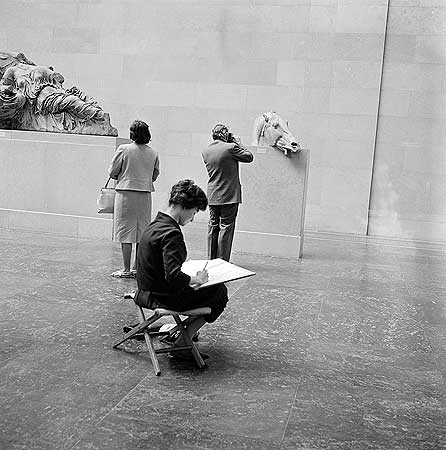
I don’t particularly want to get drawn into some of the wider discussions about the importance of museum and heritage in general – not surprisingly, as a professional archaeologist, I am of the opinion that these things are generally a ‘good thing’ and should be encouraged and promoted. I have very little sympathy for the more instrumentalist view of heritage (i.e it’s not the intrinsic value of heritage itself that counts but the wider impact it can have on society – such as engagement with the National Curriculum, promotion of literacy/numeracy, as well as ‘softer’ functions, such as promoting social cohesion; and most importantly heritage as a creator of wealth) – although I’ve not been above seizing the instrumentalist agenda when it comes to writing proposals for grants and funding for my own work. What currently gets my goat is that in a fairly typical case of doublethink, the new government is busy promoting British heritage as a source of income and prosperity through its intimate links with the tourism industry, whilst simultaneously hacking at the roots of the sector in other ways.

If the queues outside the National Railway Museum, just round the corner from me, are anything to go by, then the national museums aren’t going to have too much problem surviving. They have the internationally important collections and high profiles which will make it relatively easy for them to attract personal and commercial sponsorship, and have the high visitor numbers that will make it possible for then to weather minor drops in footfall. However, it’s the smaller, local museums that are more likely to suffer from attacks on the support infrastructure. As I noted above, they already rely heavily on volunteers to support them. Whilst there is undoubtedly much to criticise about the MLA, they do provide some of the professional expertise (security, collections management, conservation, interpretation) that smaller museums don’t have on tap. On a purely personal level, it is visiting local museums as a child that triggered by interest in the past (a brief roll of honour would have to include Reading Museum; the Museum of English Rural Life; Deal Maritime and Local History Museum amongst many others). If the government are really committed to an instrumental heritage agenda and promoting tourism, it would be good to see more commitment to supporting these kind of local institutions, as these, as much as the nationals, have potential for feeding the tourism industry. It’s worrying,although not surprising, to see a complete lack of the ‘joined-up thinking’ that governments of all political stripes are so keen on connected to this issue. Sadly, its going to be the local and small museums that have less capacity and less ability to weather financial storms that are going to suffer (and don’t even get me started on the way the HLF has been raided to support the Olympics…..)

Folk and Industry

I’ m looking forward to reading Rob Young’s Electric Eden: Unearthing Britain’s Visionary Music. As the review in today’s Guardian notes, the historiography of the British folk revival has been relatively limited (although in addition to the few examples noted in the review, there is also Georgina Boyes’ Imagined Village and the BBC 4 series from a few years ago Folk Britannia. It’s clear that Young’s project is to draw out the pastoral neo-Romantic aspect to the folk revival- with its origins in the folk collectors (Vaughan-Williams, Cecil Sharpe etc) of the late 19th and early 20th century through to the 1960s trad folk and ‘hippy’ revivals through into the pastoral noodlings of Kate Bush and potentially even Goldfrapps’ relatively recent excursion into LSD folk. This is clearly a strong line of inheritance, with the rural idyll closely tied into a British radical anti-industrial political tradition which can be traced from William Morris to the modern Green movement. British (particularly English) folk music is often unfairly decried for its rose-tinted view of a rural past (have a listen to Show of Hands’s Country Life or Imagined Village’s Hard Times of Old England as an impassioned rejoinder to this).

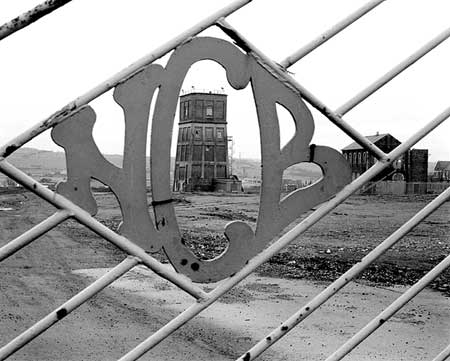
What I suspect Young’s book will not bring out (and as ever, it might have been a good idea if I’d actually read it before writing this), is the strong tradition of folk music derived from urban and industrial contexts. Traditional music was obviously most heavily embedded in the working culture of maritime world (shanties etc), but also other industries gave birth to rich traditions of song and dance. For example, the coalfields of the North-East developed and refined an existing tradition of long-sword dancing and saw an outpouring of vernacular songwriting and poetry. These alternative threads have also long been closely entwined in the folk revival. Figures such as Ewan McColl early identified the close link between folk song and the industrial working class, and collected and popularized many traditional songs about working life. He, along with Charles Parker, was also responsible for the creation of the Radio Ballads, a series of radio documentaries about industrial and other communities that integrated interviews and oral history with new music written in a traditional idiom. This industrial dimension to the current folk tradition is an important one. In recent years there’s been a new set of Radio Ballads written, and bands, such as Chumbawamba, who have come from very different musical backgrounds have embraced this aspect of the tradition.

Fantasia on a Theme by Thomas Tallis

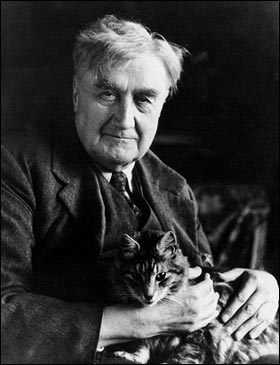
It’s one hundred years since the first performance of Vaughan William’s Fantasia on a Theme by Thomas Tallis. This has become part of the canon of British (or should that be English) popular classics (voted number 3 in its Hall of Fame by Classic FM listeners). An interesting article in last weekends Guardian contextualises the piece. What I think the article brings out is the role classical music played in the Neo-Romantic project. For me, the movement really flowers in the post-WWI period, as a direct reaction to the slaughter in Flanders and the twin perceived threats of fascism and communism. One of its key characteristics is the engagement in a metaphorical archaeology, digging into the past for powerful images and juxtaposing them, often anachronistically, with a more modern symbolic repertoire or stylistic techniques. A good example of this is Eric Ravilious’ series of pictures of chalk hill figures seen from or next to railways. The Guardian article shows how in the first decade of the 20th century a series of British composers were carrying out musical antiquarianism. They were not only rescuing the rich tradition of Tudor church music (Byrd, Tallis, Gibbons, Taverner, Dowland), but also refashioning and using it, along side folk song, in new compositions. I find it interesting that most of the traditional narratives about the rise of Neo-Romanticism tend to sideline music focusing mainly on visual arts and to a lesser extent literature.

The Making of the British Landscape

I’m now going to do that most difficult and irresponsible of things, comment on a book I haven’t read. Once can’t help but think of home-county vicars getting outraged by alleged smut on BBC drama series they haven’t actually seen, but what the hell, you only live once. Francis Pryor’s Making of the British Landscape was reviewed in The Guardian last week. As the review notes, the title is a riff on Hoskins’ The Making of the English Landscape; I’d be interested to find out how much it really is truely British in scope (don’t worry I promise I’ll read it to find out). Raeding between the lines it clearly takes a much longer perspective than Hoskins. The latter’s work barely grazed prehistory, whereas Pryor made his name as a prehistorian work on the important site at Flag Fen. Pryor’s previous popular archaeological publications have always been far stronger in his home territory of the pre-Roman world and noticeably weeker once he hits the first millennium AD. This is by the by however; what has piqued by need to comment on this blog is the fact that according to the reviewer

He worries that landscape history is on the cusp of retreating entirely into academia, taking its findings and its insights with it. As a result, ordinary people – the kind who tramp the footpaths of Britain at the weekend for no other reason than they love to – will be thrown back on to a fuzzy subjectivism untethered to real knowledge.

Certainly, Hoskin’s book was one of the few academic volumes that was both accessible and made a break through into the wider public perception and indeed made a television series based on his book. However, the high point of its popularity was probably the 1960s and 1970s and Hoskin’s is no longer any kind of household name, and inevitably the tide of new research and discoveries made in the half-century since its initial publication have rendered its modern importance primarily historiographical. Nonetheless, I’m not sure I see landscape history ‘retreating into academia’, if anything its hard to go to National Park Visitor’s centre, National Trust shop or Tourist Information Centre without being able to pick up dozens of pamphlets and leaflets about walks packed with information about the landscape through which they pass.

I wonder if Pryor is instead worried about the decrease in university extra-mural teaching. The popularising of Hoskin’s work coincide with a highpoint in extra-mural/workers eduational/evening classes; he himself I believe was very involved in this kind of outreach. Much local research (parochial in the best sense)was carried out by groups which had their origin in such groups. Undoubtedly there has been a massive retreat in this kind of non-vocational adult education, due to recent government’s heavily instrumental approach to adult learning, i.e. if it won’t help you get a job its not worth funding. This has seen over the last ten years far fewer universities offering extra-mural learning, whilst the rise of educational bureaucracy (such as the joys of Aims, Objectives and Learning Outcomes) has meant that there are far fewer individuals willing to tackle all the paperwork required to offer this kind of learning experience. This has been a real tragedy.

However, I think, that limiting our views of the relationship between academic and popular archaeology to the world of evening classes is wrong. At the same time that there has been a decline in evening classes we’ve seen a massive rise in ‘community’ heritage projects mainly funded through the Heritage Lottery Fund; just taking my own area as an example, the Northumberlan National Park has its Coquetdale Community Archaeology project, the North Pennines AONB has just launched a new community archaeology initiative called Altogether Archaeology and there was a major joint project on recording prehistoric rock art run out of Durham and Northumberland county councils. All these projects have been fundamentally based on a large-scale community involvement, and have resulted in a large number of enthusiastic individuals in the region with a commitment to and good understanding of, archaeology in the landscape. Maybe things aren’t quite as gloomy as Pryor suggests