North-East Heritage and the Coalfields: Radio 3 Free Thinking Festival talk

This is the text of a talk I gave this week at the Radio 3 Freethinking Festival at The Sage in Gateshead. It was broadcast on Friday 11th November in The Essay slot on Radio 3 – you should temporarily be able to find a link to the Listen Again facility here

“Arriving in the northeast of England for the first time a decade ago I thought I knew what to expect. There may have been pit closures, the decline of heavy industry and the miners’ strike, but this was County Durham, heart of what was once the biggest coalfield in the world. There would be pitheads and spoil heaps, there would be mines. I wasn’t expecting to see cloth-capped miners trudging back from work begrimed from a days work at the coalface, but I did expect to see mines. I’d spent time in some of the big industrial cities of the north. They were often dominated by former mill buildings, old foundries and warehouses. The workers may have gone, but the works themselves remained. When the tide of industry that had swept through the North receded, it had left the factories and mills stranded high and dry. But at least they were there. There was something fundamentally different about the North-East. The pitheads, mine shops, spoil heaps and store sheds had been completely erased. In 1914 there were over 300 coalmines in County Durham; today only one winding wheel survives in situ. It is a testament to the extent that the colliery landscape has disappeared that standing mine buildings are now outnumbered by memorials to the disasters that claimed the lives of many miners during the industry’s heyday. In Durham City, both the site of County Hall and much of the University are built on the sites of former coalmines. During recent construction work at the university, the remains of the mineshaft of Elvet Colliery were briefly uncovered. I watched groups of hard-hatted engineers and construction workers staring down onto this brief emergence of the region’s past before it was covered over and construction began anew.

I want today to look at the extent to which the collieries have been erased from the landscape of North-eastern England and make a plea for the preservation and protection of what little survives of this globally important industry.

It is hard to under-estimate the sheer scale of this disappearance of the coal industry. Even the spoil heaps had been landscaped out of existence, and spoil heaps are big… very big. The spoil heap at Ashington was, at its greatest extent, the biggest spoil heap in Europe. It’s now been almost entirely landscaped away and a country park lies in its place. Some geologists have suggested that we should characterise the current geological period as the anthropocene, an age where the human impact on the earth came to define the world’s environmental trajectory. When one comes to comprehend the extent to which the north-east coal fields has seen its mineral resources extracted from the ground, redistributed either as coal or spoil and then the subsequent scars and spoil further eroded and removed, it is hard not to agree.

But this was not just an extractive industry; it produced communities as well as coal. On a landscape scale, the rise of the mines saw a re-organisation of the settlement pattern, with new pit villages springing up in undeveloped countryside or enveloping existing settlements. An entire culture grew up that was centred on, and grew out of, the coal industry. The north-east coalfields had their own rich dialect ‘pitmatic’. It even had its own dance traditions, rapper dancing; the dancers commonly wore hoggers, the long shorts worn by miners in the late19th and early 20th century. Whilst many of these traditions and practices remain, the organic and living link between them and the communities of labour that they grew out of is becoming increasingly tenuous. Durham Miner’s Gala, originally the big meet of the unionised labour force, although once in decline is becoming increasingly popular again. But whilst the morning starts with the procession of brass bands and union banners, they no longer have a close and immediate link with the coal industry. They may parade into Durham from the surrounding villages, but they march past industrial estates, new housing developments and wasteland where the pits used to stand.

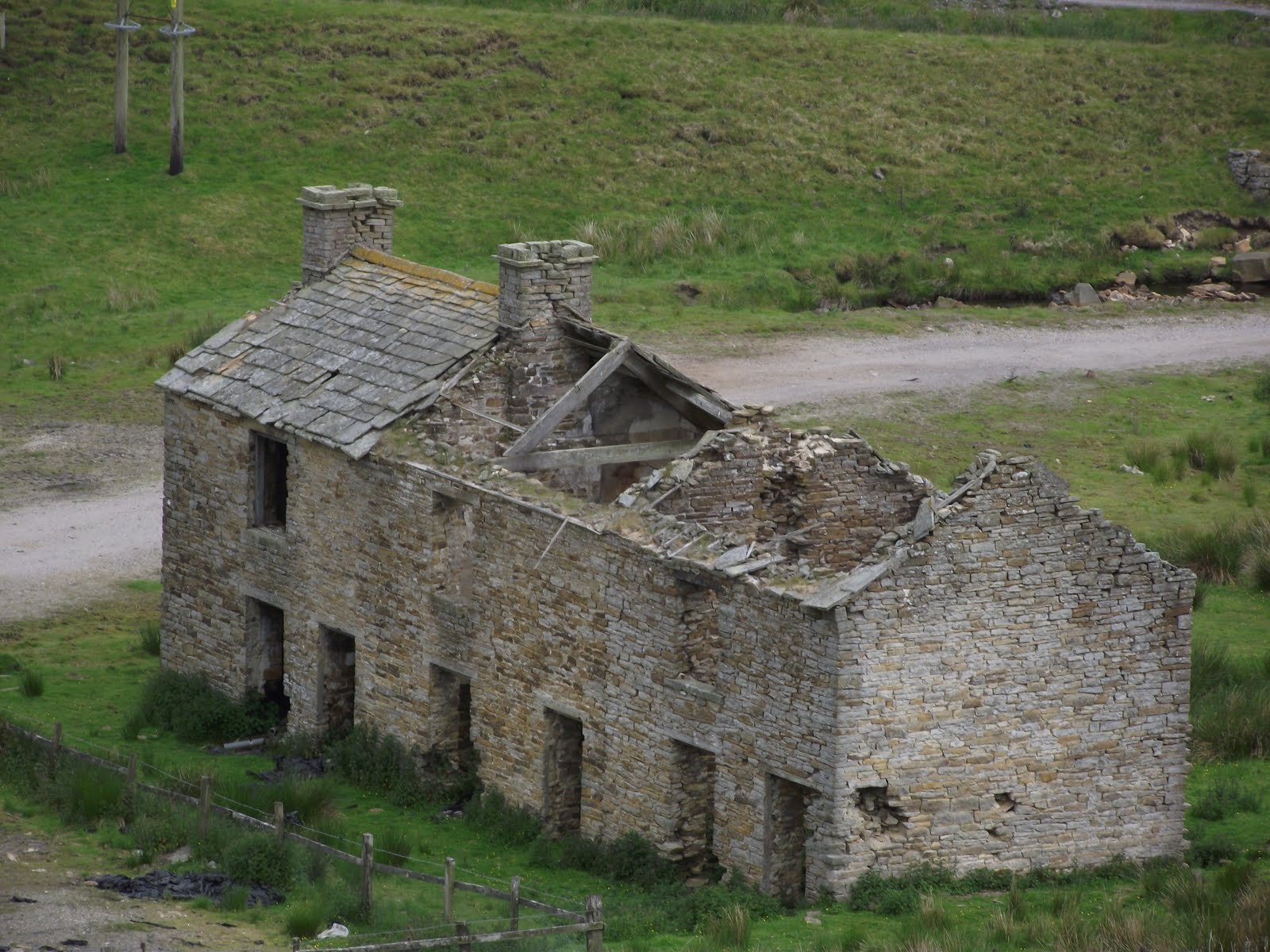
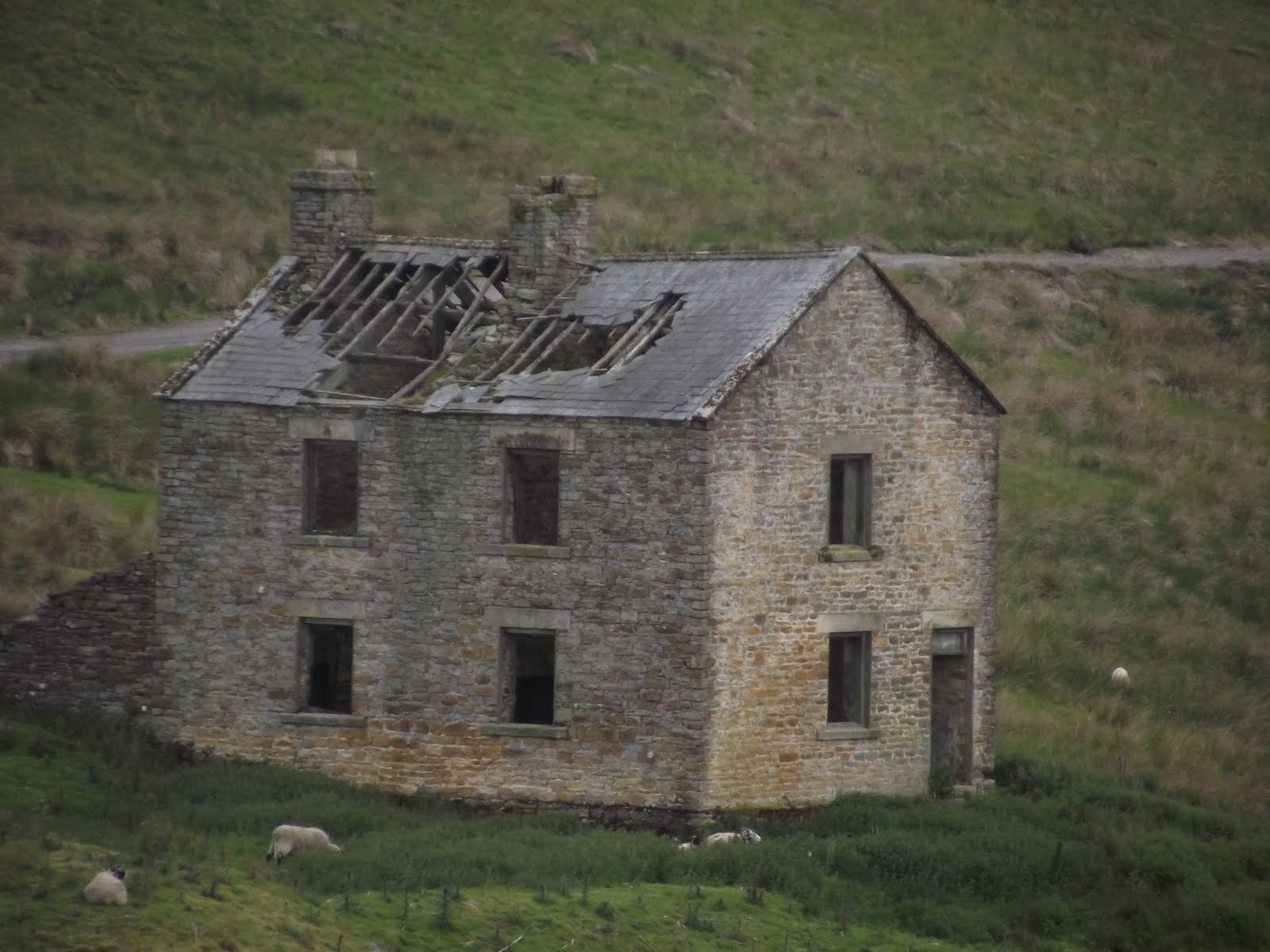
However, the coal industry was not Durham’s only extractive industry – up in the hills of the North Pennines another industry thrived – lead mining. Here the situation is very different. This industry went to the wall half a century before the coal industry was destroyed, but it has left a far more visible trace on the landscape. The industrial buildings and installations associated with extracting the lead from these bleak upland moor sides can still be seen. As with the coal industry, there was a distinct set of specialised terms to refer to these features. The hushes, adits, jigger houses, buddles and bouse teams can still be seen along roadsides and side valleys. They survived because of cheapness of land up in the hills and the lack of pressure to redevelop it – there was plenty of it and it had limited alternative uses. The communities who had moved into the area to work the lead veins simply drifted away- the non-conformist chapels lost their congregations and survived by being converted into holiday homes.

The contrast between the lead mines and the coalfields are clear – the lead valleys have kept their landscape, as the people went. However, the pit villages were different- the industries went but the people stayed. Notoriously, in the 1950s, Durham County Council classified some of these villages as not worthy of investment and aimed to demolish them and re-locate the populations. Whilst a small number of villages were entirely destroyed and their people moved, for the majority of the 120 or so villages it simply meant a lack of investment. Nonetheless since the end of this bitterly resented policy in the mid-1970s, the collieries were slowly destroyed and the spoil heaps removed.

It is a lasting tragedy that so little effort was spared in recording the physical infrastructure. There was little realisation that although the process was a piecemeal one, the demolition of individual collieries was removing an entire distinctive regional landscape. This is not to suggest that archaeologists have not been interested in our industrial past; the study of industrial remains grew massively in the post-war period. However, for a long time it was the preserve of the enthusiastic amateur, often themselves with a background in engineering or industry. Within the confines of professional archaeology there was sadly often less commitment, less will and crucially, less resources to engage in recording the remains of such a recent period. It has to be said also that within the colliery communities themselves there may have been a reluctance to see the heritage sector start to treat the places that had until recently been their place of employment as the focus of research by academics. Understandably, in the rawness of unemployment people were not always happy to see the mines packaged and sold as a ‘heritage attraction’, worried perhaps about a dewy eyed glorification of the coalfields. Others simply wanted to turn their backs away and seek new work hoping that the rapid redevelopment of the old colliery sites would see an economic upturn.

However, today, as we move further away from the great days of Durham coalfield, we are increasingly aware of what we have lost. There is also an increased appreciation amongst people living in the region of the importance of coal mining. For many, it helped to form a sense of what it means to come from the North-East. There is also a wider understanding of the central importance it had, not just for the history of the local area, but on a national, indeed international stage. For example, the need of the early coal mines to get their coal quickly and easily to local ports to allow it to be exported led to the creation of network of horse-drawn wagon ways. In the early 19th century it did not take long for the newly developed technology of steam locomotion to be introduced, giving the North-East a pivotal position in the development of steam railways. It is salutary to note that in a recent survey 68% of those in the North-East agreed that the industrial revolution is the most important period of British history and significantly 71% of those in the region believed that industrial heritage sites made them feel proud of their local area. Despite this clear local enthusiasm for the North-East’s industrial heritage there are still more Roman forts open to visitors between the Tweed and the Tees than sites connected to the industrial past. More worryingly, despite its relative lack of antiquity, this industrial heritage is at greater risk than older remains. Recent research by English Heritage has shown that 1 in 10 Grade I and II* industrial Listed Buildings are threatened. This is more than three times the national average for Listed Buildings. This is a problem that is particularly acute within this region, with the North-East having nationally the highest proportion of industrial sites at risk. Why is this? Is the recent industrial past less valued here than elsewhere? I believe not, instead there are good practical reasons. It is not easy to convert a coalmine! The best way for industrial remains to be preserved is not by turning them into heritage attractions, but by finding effective and economic ways for them to be used for modern purposes, as offices, homes or factories. But by their nature, the remains of coalmines are designed to house heavy machinery or had very specific technical functions, which make it hard to find alternative purposes for them. In general, sites connected to extractive industries are not easily re-appropriated for modern use – and in the North-East sites linked to coal, lead and iron mining form over 50% of the sites at risk. There is also a wider aesthetic challenge; historic sites such as castles, monasteries and stately homes are seen as beautiful in their own right and often thought to actively contribute to a landscape vista. Whilst many people may feel that industrial remains have a certain utilitarian elegance, this is a much harder notion to sell to the wider public. All too often, the remains of industry are seen as something inflicted on a region rather than organic elements of a historic landscape.
It is not just a question of protecting upstanding industrial buildings.

Another key aspect of the region’s industrial past can be found beneath the ground, surviving as archaeological remains. Many mines saw investment and technological development when the coal industry was at its height. They were constantly being rebuilt and expanded. This meant that the colliery buildings that were removed when the industry declined were just the latest version of a sequence of structures on the site that may go back 150 or even 200 years. These early collieries could be very different in appearance to their later iterations. Watercolours of 19th century coal mines by the Victorian artist Thomas Harrison Hair show industrial landscapes subtly different to the ones we associated today with the coal industry. His landscape view of ‘A’ pit at Hebburn is dominated by what at first appear to be carousels, but on closer inspection are wooden gin-gangs, horse-driven engines for providing motive power to the colliery. Behind them looms an impressive pithead, which unlike later 19th century examples is an entirely timber structure. The screening shed at Phoenix Pit, High Etherley he depicted in a watercolour probably done in the 1830s could easily be mistaken for a medieval half-timbered building. The dominance of wood as a construction material over stone, brick and metal is a reminder of how much our mental images of colliery landscapes are influenced by the photographic and film images of early 20th century mines. It is this kind of prehistory of the coal industry that can only be accessed through archaeological investigation.

Yet, whilst today the public and heritage professionals are increasingly open, indeed positively enthusiastic about preserving our industrial landscapes, the recession presents new challenges. Even when the physical arrangement of industrial structures are suitable for redevelopment, the higher additional costs associated with taking on an historic building is often a disincentive to developers, particularly in straightened economic times. With current planning controls that ought to help conserve these kinds of sites under threat from the new Draft Planning Framework, it is likely that we will see more industrial sites destroyed rather than re-developed as investors would rather see a cheap and uncomplicated new build than take on a potentially problematic historical structure. The kinds of grants and advice that should be in place to encourage sympathetic engagement with these sites are vanishing in the crackdown on public spending.

Where planning permission has been granted to demolish or substantially alter these sites, current legislation stipulates that, where appropriate, archaeological investigation should be carried out on the ‘polluter pay’s principal. This, though, requires local government to have access to specialist in-house conservation and archaeological advice. Instead we see local authorities massively cutting these key services. Even within the North-East we are faced with the possibility that large areas of Teesside will be without any archaeological support, a serious and urgent threat to the industrial heritage of that area.

This is not a call for the end to development or even for the end to destruction of buildings and landscapes connected to our industrial past. A refusal to sanction change would lead to a sclerotic landscape imprisoned by the physical legacy of dead industries. Whilst it is possible, indeed essential, to critique the notion of ‘sustainable development’ as presented in the new governmental framework for planning, we need to strike a balance between preservation and renewal. But to do this, we need to have an awareness of the extent to which we have already lost elements of the industrial landscape and be able to evaluate both the social and economic value of these sites. This involves not just a detailed consideration of each individual case; individually, a terrace of miner’s housing or an isolated fitters workshop may not have much significance. Nonetheless, a sense of the place that these specific cases play in the wider landscape is essential if we are to avoid our industrial landscapes dying a death of a thousand cuts. In addition to this basic challenge, one that is in essence curatorial, there is a second barrier to overcome, and this is an interpretative and representational one. One does not need to be a hardcore Marxist theoretician to recognise that in the later 18th and 19th centuries the massive expansion in British industrial production was not simply predicated on rapid technological advances. There was also a profound alteration in labour relations, with the development of a new industrial working class. Neither is it a particularly radical proposition to suggest that the relations between the proprietors and workers were marked by inequality and exploitation. On a wider scale Britain’s precocious industrialisation was also closely connected to its imperial expansion. When we come to presenting and interpreting our industrial heritage we need to bring this on board. All too often the story of our industrial past is presented as a teleological story of scientific and engineering know-how and entrepreneurial nous. Whilst this is certainly one aspect of our industrial past, we need to be alive to the conditions and constraints within which the all-important workers were situated. We need to emphasise their contributions to industrialisation, the price they paid and where appropriate their acts of resistance. If we don’t do this we run the risk of providing what the French museologist Philippe Hoyeau has called a simple ‘restaging of dead labour’.

Despite these challenges, we should be positive. The immediate trauma of the rapid de-industrialisation of the coalfields, if not forgotten, is at least blunted. There are new generations in the North East who have never directly known the coalfield, but who have parents and grandparents for whom such landscapes were integral parts of their personal histories. We are at the point where “current affairs” is beginning to tip into history, where personal experience is replaced by second-hand testimony and where living memories are replaced by historic cartographies. We can’t stop this inevitable progress of change, nor should we want to, but we can take the chance to save what can be saved, record what can be recorded and continue to tell the story of an industry that defined a region.”

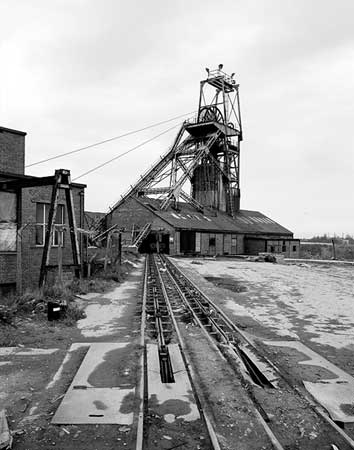
NB: The picture is of Murton Colliery (Co. Durham) from English Heritage’s excellent Viewfinder website.
Muddy trenches and ivory towers

I’ve been looking at the recently published Southport Group report, a document resulting from a working group drawn from a cross-section of the English archaeological sector which aims to address the implications of PPG16 with the new PPS5. PPG16 was the planning policy guidance document which in 1990 established the current system integrating archaeology into the planning system. In practice, this has led to a massive rise in archaeological fieldwork and an associated expansion in the commercial archaeology sector. It was predicated on the notion that when a development threatened to impact on archaeology it should either be mitigated against (by, for example, a change in the plan of the site) or ‘preserved by record’ through excavation. The advent of the new PPS5 changes some key underlying assumptions. One major change is the assumption that ‘preservation by record’ is possible and that an objective recording and archiving of a site is an unproblematic process. Equally, there is an increased realisation that simply mitigating damage to the site is laden with inherent challenges; it does not stop the inherent decay processes faced by all archaeology and some mitigation strategies, such as needle piling, may even speed up these processes. Instead PPS5 moves towards the notion of ‘offsetting’ with a realisation that there is always going to be a trade-off between mitigation and recording, and throwing into the mix an increased emphasis on involvement by the wider community (yes, the word ‘localism’ rears its head) and an increased focus on capitalising on the research data generated by more partnership working (including local groups, local government curators, commercial contractors and academia). I want to touch on the proposals linked to increased community involvement in another post, but in the meantime I want to explore some of the suggestions put forward about the role of academia in commercial archaeology.
It calls for an increased involvement by British universities in the commercial archaeological process. This is undoubtedly an exciting prospect; the huge increase in archaeological information from the sixfold increase in excavations over the last 20 years is enough to whet the appetite of any archaeologist working on British material. However, it would foolish to pretend that there has long been a certain level of tension between academia and the commercial world. There is a tendency for field archaeologist to stereotype academics as out-of-touch, unrealistic, ivory tower scholars, with no understanding of the reality of life in the trenches, whilst academics can often characterise the commercial sector as under-theorised, technicians happy to compromise their academic integrity for a fast buck.
The Southport report suggests that there has been a reluctance for academia to engage in commercial archaeology for a number of reasons, including the perception that the demands of the Research Assessment Exercise (Research Excellence Framework as it is now) have encouraged many universities to disengage from British archaeology. I must confess, I’m not entirely convinced about this; it is certainly easy to think of a series of senior archaeologists with impeccable research profiles who focus partly or wholly on UK archaeology.
One factor that is not mentioned, however, is the increased separation between the commercial world/local government archaeology and academia for a range of professional reasons. In the past it was not uncommon for individuals to be able to make the transition between the commercial sector and universities. There are plenty of famous university archaeologists who had an extensive track record in commercial work (or its pre-1990 equivalent). For example, people like Philip Rahtz, Martin Carver, Graham Webster and Philip Barker who had significant pre-academia careers before making the transition into the university world. It is hard to envisage happening to any extent now. This is because of changes in the way in which academic careers are constructed. The first change is the demand that all lecturers have a PhD – a laudable idea in theory, but in practice this immediately precludes senior field archaeologist, who may have extensive track records in major excavation, but no doctorate, becoming academics. A second issue is the need for an academic to have a strong portfolio of REF-submittable publications is paramount. However, even if a field archaeologist has a strong record of bringing field projects to publication they are unlikely to be seen as comprising a strong REF submission. Instead, the main career path for those entering academia is PhD – post-doctoral research posts – lecturer; increasingly few academic archaeologists, particularly of the younger generation have ever experienced employment outside universities, beyond perhaps a couple of months working as site technicians during the summer vacation. This means that the current cohort of academics is increasingly detached from the form of archaeology that produces the overwhelming bulk of data for those working on British archaeology today.

This is undoubtedly something I’ll come back to…

Bunny Huggers and Red Tape

I’ve just done a broadcast on Radio 3’s Night Waves about the commercialisation of British archaeology. It’s only a short piece, and broadly speaking positive about the unexpected surprises that have arisen out of archaeological excavation that has been carried out as part of the planning system. It was not intended to be an in-depth overview and is hopefully a short prolegomena to a more considered exploration of this issue.
In a time when heritage is under increased threats from many directions, my piece could certainly be accused of being soft on these problems. Frustratingly for me, I wrote and recorded it before the ‘Bunnygate’ saga blew up, so I was unable to bring this into my discussion, so I want to use this blog post to explore some of the current challenges faced by archaeology in Britain today.

I’ll begin with ‘Bunnygate’; for those not in the know, this is connected to a speech given by Cllr Alan Melton, leader of Fenland District Council on June 21st at the 4th Annual Cambridgeshire Times/ Wisbech Standard/ Fenland Council Building and Design Awards. In it he launched an attack on the role of heritage and archaeology in current planning legislation, demonising it as hindering growth. It is worth repeating a key part of this diatribe

I can announce tonight, that from the 1st July. A requirement for an Archaeological dig/survey will not be required. The requirement will no longer feature at pre-app. Or form part of the committee agenda. With one exception, in local known historical areas, such as next to a 1000 year old church. Common sense will prevail! (Neale Wade springs to mind) The bunny huggers won’t like this, but if they wish to inspect a site, they can do it when the footings are being dug out.

Not surprisingly (except perhaps to Alan Melton himself) this piece of sub-Daily Mail oratory resulted in a massive backlash from the archaeological community. The most rapid response was a grass-roots campaign organised via Facebook with the other more formal and august archaeological bodies being slower to respond; some of these ‘official’ responses (such as that from the CBA including a fine performance by Mike Heyworth on Radio 4’s PM programme) were considered and to the point, others, such as that of the IFA were astoundingly anodyne suggesting a somewhat sclerotic organisational structure incapable of acting rapidly to address such incidents.

Now, it was rapidly pretty clear that Alan Melton’s threats was nothing more than a piece of blow-hard after dinner rambling aimed at golf-club cronies rather than a thought-through policy decision. Doubtlessly, local government officials has to hold back their anger and frustration as they patiently explained to Cllr Melton that he had no power to rewrite English planning legislation and that perhaps he should have a milky drink and have an early night. However, as a number of bloggers have pointed out, despite the ham-fisted way in which it was done, Alan Melton appeared to be following the sub-text of the CONDEM localism policy to its logical conclusion, i.e. local authorities should be able to tailor their planning guidelines to meet local requirements (which in his opinion appears to be to turn the Fenland into a housing-estate) and that in the current ‘difficult climate’ priority has to be given to economic growth (Discuss this amongst yourselves). It is unlikely that Melton was the official vanguard of the triumphant march of the Pickle-istas, but he clearly thought he was doing his dark master’s bidding.

Nonetheless, this sorry saga does emphasise the clear subtext of the localism agenda, which is that any kind of framework that might act to protect the environment (built or natural) is the malign expression of the Big State stifling the green shoots of growth. This can be seen in a series of recent proposals, such Grant Shapp’s Community Right to Build which would allow, in certain circumstances, the construction of rural housing without a specific application for planning permission,

At the other end of the scale the government also plan to ‘fast track’ planning enquiries linked to major infrastructure developments, such as road and rail schemes and have already abolished the Infrastructure Planning Commission. It is hard to see how ‘fast track’ can be translated as anything but ‘half-arsed’. Once again, the important systems of regulations that protect our environment are threatened.

This kind of chipping away of the planning system is dangerous because it is so insidious. There is no open broadside on PPS5, but instead a death by a thousand cuts, as the remit and power of these measures are slowly chipped away by the increase in ‘special circumstances’ in which existing legislation can be side-stepped or ignored. This makes it harder to fight against, as there is no single target on which those opposed to this process can train their guns. There is also the important related danger presented by the wholesale reduction of local government curatorial staff whose role it is to enact and monitor the existing planning sytem. Whilst the County Mounties have sometimes been criticised for failing to be rigorous enough in their policing of commercial archaeological excavation, it is not hard to see that reducing their numbers is unlikely to improve the situation.

In the face of this kind of ideological approach to the reform of local planning it is essential to keep a very close eye on forthcoming initiatives. It is easy enough to see the threat (no matter how half-arsed) in the ill-informed ramblings of the Alan Meltons of this world. It is harder to pick up on the small print of seemingly harmless governmental policies and mobilise and focus opposition to them. The government’s embarrassingly populist ‘Red Tape Challenge’ will be turning its jaundiced eye onto the Environment in September; this could prove very interesting…

The North Pennines

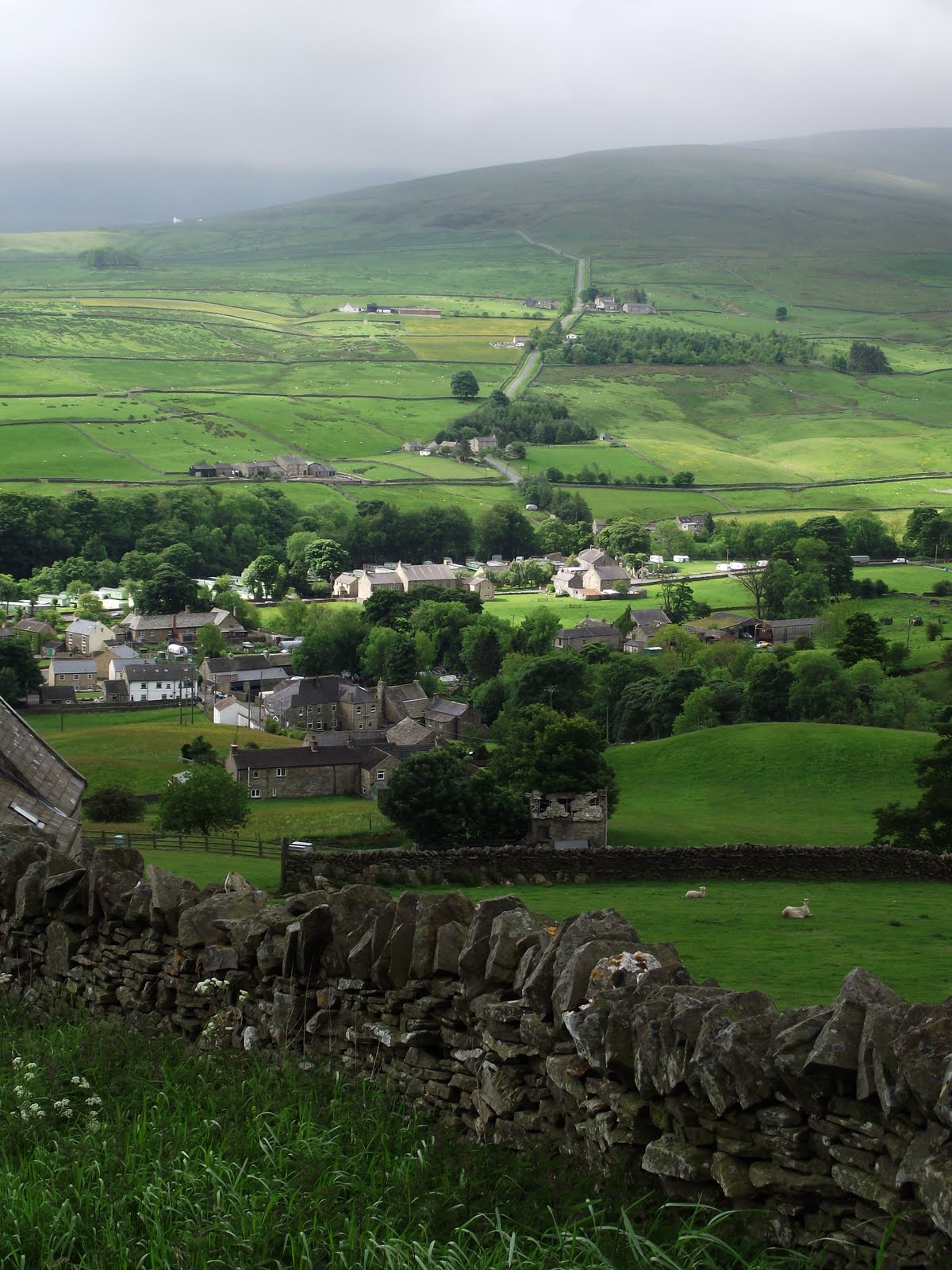
Last week I got the rare chance to head up into the North Pennines as I had to go to Westgate to look at a dig my university has been involved with. I’m not naturally drawn to moorland landscapes. I have a fairly low tolerance for Gore-tex and Kendal Mint Cake and normally prefer my countryside on the more pastoral side. It may be heresy, but I must admit I can take or leave the Lake District or Snowdonia. However, I do have a soft spot for that stretch of the Pennine ridge between Stainmore and Hadrian’s Wall. Unlike the Yorkshire Dales to the south it has managed to avoid the excessive tidying up and gentrification which has turned some parts into a lumpier version of the Cotswolds.

My drive took me up to Weardale with a diversion to Rookhope then up over to Alston and down Teesdale. The weather was beautiful, the hay meadows were in full flower and the dales were saturated with birdsong. Bizarrely, this is an area where oyster-catchers and curlews nest in the summer- close your eyes and you could be by an estuary rather than in some of the highest moors in England. This was also a landscape loved by WH Auden:

From scars where kestrels hover
The leader looking over
Into the happy valley,
Orchard and curving river,
May turn away to see
The slow fastidious line
That disciplines the fell
Hear curlew’s creaking call
From angles unforeseen…

(Missing, 1929)

Many of Auden’s poems keyed into the thing that keeps me coming back to the North Pennines; it is a post-industrial landscape.

Who stands, the crux left of the watershed,
On the wet road between the chafing grass
Below him sees dismantled washing-floors,
Snatches of tramline running to a wood,
An industry already comatose,
Yet sparsely living…

(1927)

From the Roman period until the early-20th century this was an area dominated by lead mining. In the 19th century, the mines of the London Lead Company and the Blackett-Beaumont Company produced more lead than anywhere else in the world. This industry had a direct impact on the land in terms of the scars of mining and the construction of pithead and processing facilities. It also brought people into the Dales and created a distinct human landscape – non-conformity was strong and the lead companies had a strong ethic of public benefaction and investment in supporting their workforce. Methodist chapels multiplied and many areas of miners housing (‘mine shops’) still survive. At exactly the same time, further east, the great north-east coal field was also reaching is zenith; through much of the 1800s County Durham was dominated by these two great extractive industries. The lead mining declined in the earlier 20th century whilst in the County Durham the coal industry did not collapse until the 1960s and finally dying in the 1990s. However, today, virtually nothing survives of the collieries– if you did not know it, it would be hard to tell that you were in the heart of a once-thriving coalfield. The pitheads are long dismantled and many mines are built over (my last two jobs in Durham have seen me working in offices on the sites of former coal mines). Even the spoil-heaps that once dominated much of east Durham have been sculpted and shifted out of existence. This is in contrast to the lead mining area. Here land is cheap and there is little pressure for development- the mine buildings stand derelict as in places do the miner’s houses. The scars caused by hushing and processing have never been erased. It’s a landscape where the evidence for the industry is still apparent. The mines always operated alongside farming and the moors were owned by the great estates and used for game shooting. The moors are still home to sheep and grouse, but the miners are long gone.


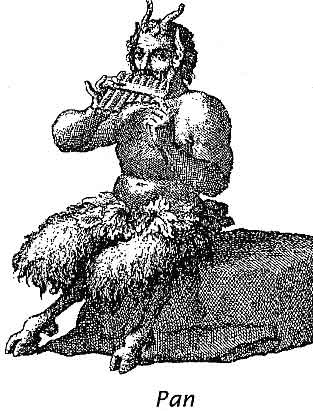
The Great God Pan

Most people think of Wind in the Willows (1908) as a rather jolly and ever-so English story of meadows, moles and mucking about in boats. However, within it is a haunting, mystical passage, which see the animals hearing mysterious piping and then encountering the god Pan:

“he looked in the very eyes of the Friend and Helper; saw the backward sweep of the curved horns, gleaming in the growing daylight; saw the stern, hooked nose between the kindly eyes that were looking down on them humorously, while the bearded mouth broke into a half-smile at the corners; saw the rippling muscles on the arm that lay across the broad chest, the long supple hand still holding the pan-pipes only just fallen away from the parted lips; saw the splendid curves of the shaggy limbs disposed in majestic ease on the sward”

Interestingly, I’ve come across a number of other depictions of Pan in late 19th and early 20th century English literature. Probably the best known is Arthur Machen’s The Great God Pan (1890), a book which was a great influence on writers such as HP Lovecraft. Its depiction of Pan is a diabolic one and a world away from the awe-inspiring yet ultimately benign Pan in Wind of the Willows. More recently, I’ve come across another appearance of Pan. This is in a short story by EF Benson (of Mapp and Lucia fame) entitled ‘The Man Who Went Too Far’ (written I think in the 1920s). In it, Frank Halton, a young artist retreats to he New Forest and opens his soul to Nature. At first, this results in him regaining a youthful vigour as he begins to hear the ‘strange, unending melody’ of Pan’s pipes. He anticipates ‘a final revelation..a complete and blinding stroke, which will throw open… once and for all, the full knowledge, the full realisation and comprehension that I am one…with life’. Inevitably, no good can come of this, and he is found by a friend with his face fixed in terror and marks on his chest ‘as if caused by the hoofs of some monstrous goat that had leaped and stamped on him’. I am intrigued by the localisation of Pan in particularly English landscapes. Although he comes across differently in each case, there is a strong sense of both attraction and terror inherent in him and his links to untamed nature. Intriguingly, there is also a passing reference in Puck of Pook’s Hill by the Roman soldier Parnesius to a ‘the little altar I built to the Sylvan Pan by the pine-forest beyond the brook?’ – pleasingly, Wind in the Willows also harks back to a Roman past with Badger’s description of an ancient city that preceded the Wild Wood: ‘People come—they stay for a while, they flourish, they build—and they go. It is their way. But we remain.’ – it looks like Pan may have remained too.

Canal Ghosts

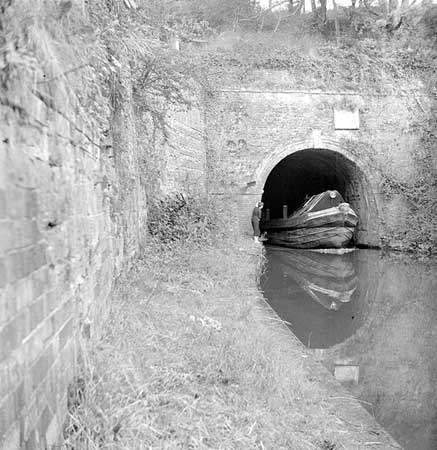
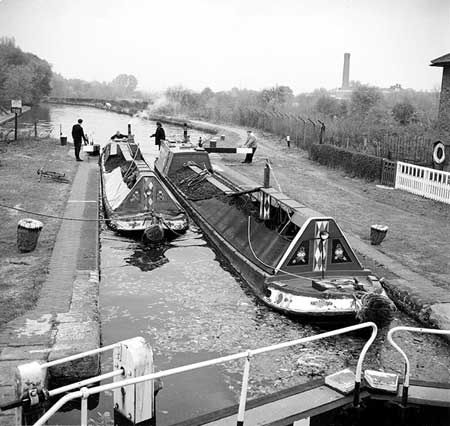
Following on from my last entry, the two key figures in founding the Inland Waterwazys Association were Tom Rolt and Robert Aikman. However, I’ve stumbled across another interesting connection between these two men; they also both wrote ghost stories. Indeed, both have stories anthologised in the excellent Oxford Book of English Ghost Stories. Rolt’s ‘Bosworth Summit Pound’ is, as the name suggests set on a canal. Aikman’s story The Cicerones also appears in the same volume. It has long been one of my favourite supernatural short stories and even if it doesn’t keep you awake it should certainly put you off Belgian cathedrals for a while (although I always mentally visualise it being set in Boulogne Cathedral)

Canal Vision

On Monday night I caught The Golden Age of Canals, one of those wonderful documentaries that BBC4 insists on sneaking out without telling anyone. Although it’s not clear from it title, it was primarily about the movement to prevent British canals falling into dereliction following a final later flowering during World War II, rather than an in depth exploration of their initial creation. One of the key figures in the establishment of the key lobbying conservation movement the Inland Waterways Association was Tom Rolt. He is someone I’ve been becoming increasingly interested in. He was along with figures like Kenneth Hudson at the vanguard of the creation of the practice of Industrial Archaeology, and was not only involved in protecting canals, but was an early pioneer of preserving railways. Pleasingly, he partly owes the success of his first book, Narrow Boat to H.J. Massingham, who is someone I’ve blogged about before. The rise of an interest in the industrial past is something that has been largely neglected in the huge literature generated on the relationship between landscape and environment and the creation of particular narratives about what it means to be ‘English’. Generally speaking, the meta-narratives have been about the anti-modernist and predominantly pastoralist visions of the Neo-Romantic movement (though to be fair David Matless’s excellent Landscape and Englishness is far more subtly argued and contains a number of pages on Rolt). However, in the 1940s and 50s we can begin to see an alternative vision of a distinctively English landscape constructed around the industrial past – interestingly this appears at first to involve particularly steam trains and canals. These are elements of technology that we clearly receding in importance, and significantly I think were physically able to escape the confines of urban landscapes and strike out into rural landscapes. For the first time, it appears people were distinguishing between an interest in technology and modernist agendas. Of course, as Alexandra Harris’s recent Romantic Moderns makes clear the Neo-Romantics were as much Neo- as Romantic and artists such as Eric Ravilious and John Piper were interested in depicting relics of older industry. However, people like Rolt were perhaps the first to flag up the importance of industrial technology, providing it with some sense of time depth, and importantly, flagging it up as something worth saving.

Cecil Sharpe: Photographer!

I’ve just come across the on-line image gallery of the photographs taken by Cecil Sharpe of the singers and musicians from who he collected his music. These are an absolute revelation. Despite the massive expansion of photography in the later 19th and early 20th century it is incredibly rare to see portraits (and this is what they are) of the working-class, particularly rural workers. The only parallels I can think of are the 19th century ‘mugshots’ of criminals taken from police records.

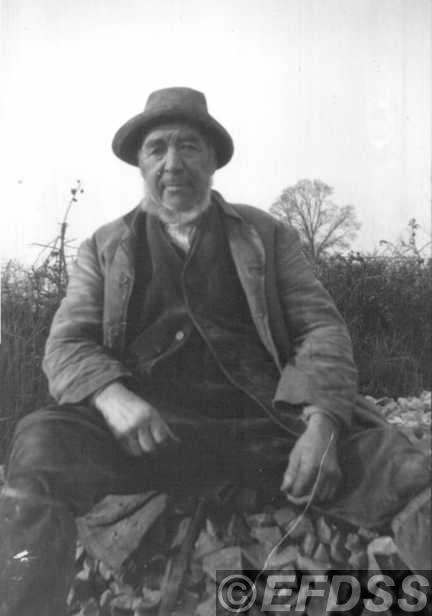
Two things impress me particularly about Sharpe’s images. First is the gaze of the subjects- straight on at the camera confronting the photographer and the viewer. Many are very relaxed and not at all nervous about having their photographs taken. Also, many of these individuals are elderly, they aren’t wearing late Victorian or Edwardian clothes, instead they are dressed in the costume of mid-19th century labourers. With their chin-strap beards and wide-brimmed felt hats they belong to the world of the Tolpuddle Martyrs not Lark Rise…

‘People who don’t like to hear an old song, I don’t know what they do want to hear’


Cecil Sharpe is one of the founding figures in the English folk revival. He was in the forefront of collecting traditional songs and tunes in both England and the Appalachians in the early 20th century. Like most such pivotal individuals he has been the subject of much revisionism, and there is a tension between celebrating him as a valuable collector of a vanishing tradition and condemning him for exploiting those who provided his songs and bowdlerising and editing his material to provide an orthodox canon of ‘authentic’ material. However, I think it’s easy to forget the incredibly important work done by collectors from the 1930s onwards, by which time recording equipment was more transportable allowing a fantastic corpus of songs to be recorded as performances, not simply transcribed straight to paper. It gives us a great chance to hear the performers and singers themselves without an intermediary. I’ve been recently exploring some of this material through the Voice of the People series issued by Topic Records (available on Spotify). One of the revelations for me has been that some of this field recording was Alan Lomax, who is best known for his recordings for the Library of Congress in the US. I must confess I never knew he strayed this side of the pond.

Current favourites include the singing of Fred Jordan [Spotify link to We Shepherds are the Best of Men],
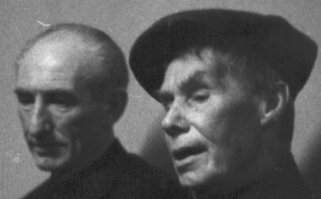
Harry Cox (pictured and from who the title quote was taken) [Spotify link to Just as the Tide was flowing] and
Walter Pardon [Spotify link to an unusual version of Raggle Taggle Gypsies]

Disappeared noises

An item on PM on Radio 4 about the power of sounds to evoke emotions got me thinking. The article discussed the impact of the sound of the Merlin engine [] of a Spitfire. Much as I hate to admit it, I am no longer in the first flush of my youth, and I’ve noticed that certain sounds that were part of my childhood no longer exist.

Telephone bells; you get ringtones, trimphones, bleeps and tunes, but analogue phones bells have gone (as have phones with dials – in a brief informal survey of my students none of them had ever used a dial phone)

Foghorns- I remember lying in bed at my great-aunts house in Deal listening to the foghorns. I think they’ve all been taken out of service now (as have the lightships on the Goodwin Sands we could see when we were night swimming).

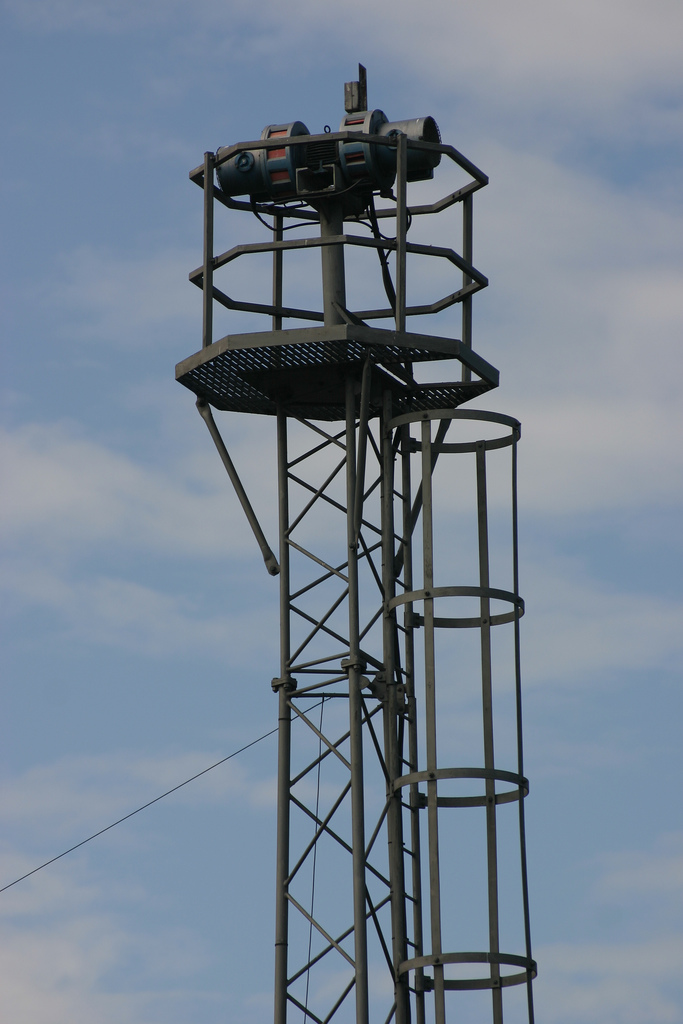
The Broadmoor siren – this is a slight cheat as its still operational, I’ve simply moved away. I grew up close the high security hospital at Broadmoor (home of Peter Sutcliffe and others of that ilk). Because of the high risks posed if a prisoner escaped, the surrounding area was provided with a network of sirens to warn the population. Every Monday morning at 10 o’clock, it was tested, first with the wail of the alert then the monotone of the ‘all clear’. I must have heard this nearly everyday for the first ten years of my life. Looking back it’s a strange thing to have grown up with, but at the time it seemed utterly normal. I can also remember wanting people to escape as it meant we got kept off school!