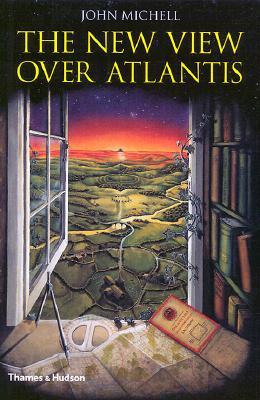
View over Atlantis


Sad to see that John Michell, New Age mystic, counter-culture guru and author of the View over Atlantis has died; particularly as only last night I was reading the large retrospective of his life and thought in the latest issue of the Fortean Times- you can see the FT obituary here. Although as a hard-nosed academic archaeologist I obviously have no truck with ley lines and earth magic, it’s hard not to be seduced by the love of landscape which stimulated and pushed Michell’s work.

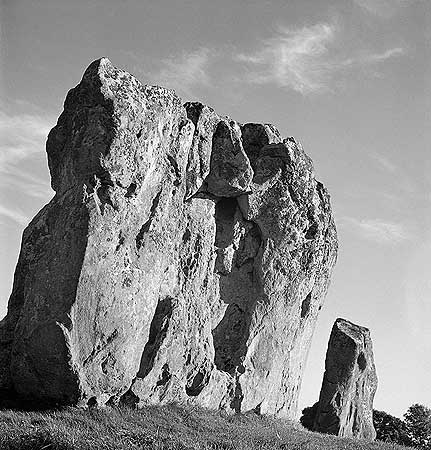
My own research is on the early medieval period and I have very little interest in prehistoric archaeology from an academic standpoint. However, I do have a profound Romantic attachment to prehistoric landscapes, particularly the Neolithic and Bronze Age monuments of the Wessex chalk downland. I think this stems partly from having grown up in Berkshire and in the course of my childhood been regularly taken to look at hillforts, barrows and megalithic monuments. My experience of this landscape was also stimulated by a number of books and television programmes. I remember particularly a BBC children’s drama called The Moon Stallion, which was full of typical 1970s children’s telly, cod mysticism and general New-Age jiggery pokery, and was, I seem to remember centered around the White Horse at Uffington, the Ridgeway and Wayland’s Smithy. I was also intrigued by the images in Kit William’s book Masquerade, which also had a Wessex- New Age vibe going on in it; I never had my own copy, but coveted those of my friends. As a consequence of this, I still have a close personal and emotional connection to these prehistoric ritual landscapes; always seen at their best I think in the depths of a winter. I don’t want to know about the archaeology, I just want to enjoy them.

ps: When I was writing this just now, I was absolutely convinced that the BBC series was called Sun Horse Moon Horse; which it turns out is actually the name of a Rosemary Sutcliffe book, about the White Horse, which I am absolutely convinced I’ve never read or even knew about before.
Common Wealth

Those who scour the obituary columns may have noticed that Wing Commander Ernest Millington DSC, the last MP who sat in the Commons during WWII has just died. It’s not only this that makes him important; he was one of the few members of the short-lived Common Wealth party to become an MP. The Common Wealth party was founded by members of the Labour party and other radicals who disapproved of the Conservative-Labour electoral truce put in place during the War. The parties three key platforms were Common Ownership, Vital Democracy and Morality in Politics (which have rather a fine contemporary resonance).

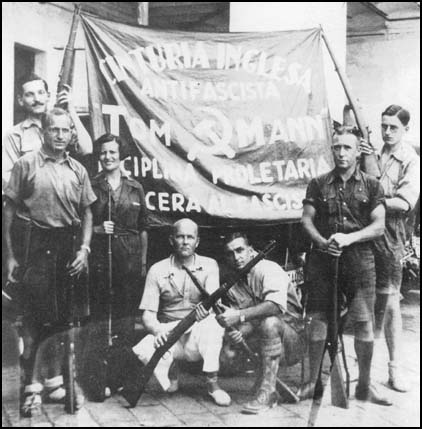
Common Wealth was founded by Richard Acland, JB Priestly and Tom Winteringham. Tom Winteringham (the balding figure in the photograph)has long been a bit of a hero of mine; he commanded the British Battalion of the International Brigade in the Spanish Civil War before being wounded at Jarama. He broke with the Communist Party in 1938 and went on to take a leading role in running and training the Home Guard in Britain during World War II using techniques he’d acquired in Spain. Coincidentally, I’ve just started reading Hugh Purcell’s The Last English Revolutionary: A Biography of Tom Wintringham 1898-1949. All I need to do now is find an archaeological connection… (though Priestly was married to the archaeologist Jacquetta Hawkes).

Massingham and Archaeology

I’m currently reading a lot about the way in which archaeology was used in popular writing between 1918 and 1945. Whilst not surprisingly, the most high profile aspect of archaeology in the inter-war period was exploration in Egypt and the Near East, there was also a great interest in the British archaeology. The prehistoric monuments of Wessex loom large in much topographical writing at this time, such as the various series put out by publishers like Batsford. This was partly linked to a rise of rural tourism, as access to motorcars and the increased popularity of hiking and rambling meant that increasing numbers of people were exploring the countryside in a way not possible before. The cover art of many of the Ordnance Survey maps of the 1920s and 1930 reflect this increased interest in exploring the British landscape. Archaeology was also used by a number of writers of this vintage as a source of evidence for explaining and understanding the many problems seen as facing society, particularly the rise of industrialism and the changing face of rural life. Crucially much of this output was also focused on prescribing changes to society allowing it to meet these perceived challenges.

Regular readers of this blog will know that I am particularly interested in the work of John Massingham, one of the leading ruralist writers of the mid-20th century. He regularly used archaeology in his works, both as a source for metaphor and analogy, and also to shape his agenda for a revived agrarian society that was opposed to the mechanisation and depersonalisation of social relationships which he so hated in industrial society. One of his early books, Downland Man (Published I think in 1925), is almost entirely archaeological in content. In this odd volume, primarily focused on the prehistoric monuments of Wessex, he puts forward an entirely new chronology for prehistoric society, and crucially argues that a golden age of peace and prosperity was destroyed by the introduction of metalworking. He also promotes the notion, which was outmoded even at the time, of diffusionism; essentially that all the key changes in society were diffused out from a single point of origin, usually Egypt. Taking this diffusionist point of view he regularly attacked social Darwinism throughout this book (and much of his other writing), which he saw as a model for social progress predicated on conflict.

Massingham is particularly interesting, as unlike a lot of the ruralist and agrarian writers of this period, he actually had some archaeological training. After spending some time as a journalist (his father was the radical journalist Henry Massingham) he joined the staff of Grafton Elliot Smith, who was based at UCL and held hyper-diffusionist views (and indeed wrote the forward to Downland Man). It is clear from reading his books that Massingham was up to date with contemporary archaeological writing, such as the works of Vere Gordon Childe, and by the 1940s was in correspondence with W.G Hoskins, one of the key figures in English landscape archaeology after WWII. I’m hoping to do some more serious work on the archaeological dimension of Massingham’s work, which will form a paper in a session I’m trying to put together for TAG on Englishness and Archaeology. Pleasingly, I’ve found out that Massingham’s archives, including his archaeological notes, are held in the Museum of English Rural Life, in Reading, which was one of my favourite museum’s as a child.

Landscape Distinctiveness

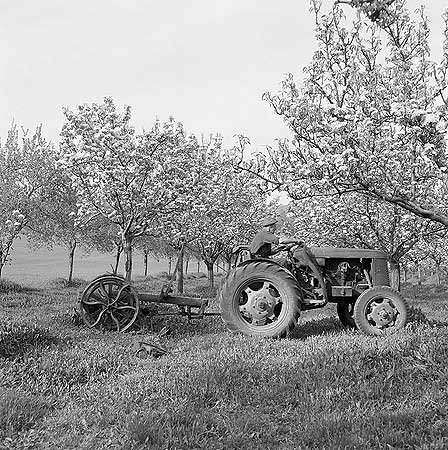
As a lover of landscape (and cider) I was pleased to read about new initiative by the National Trust to halt the decline in English orchards and attempt to revive them as part of the landscape. Over 60% of orchards have been lost since 1950, partly due to the impact of successive EU agricultural policies which rewarded over-production and encouraged farmers to put down as much land as possible to cash crops, and also due gradual erosion of orchard land around villages due to building and property development.
This project is something to be welcomed, as it is part of a larger move in current rural policy to maintain landscape distinctiveness. In the past, local landscapes showed a high-level of idiosyncracy. There were (and still are) broad regional patterns in the English landscape, such as the distinction between the broad zone of ‘enclosed’ landscapes running in a swathe across the country from the North-East through the midland plane to Dorset and the so-called ‘ancient’ landscapes found in the south-east and much of the west and south-west. Laid over these high-level landscape ‘provinces’ are distinct regional styles of hedge-laying, wall-making and gate building, as well as climatic and geological micro-topographies. This meant that England was a country of many distinct local landscapes.

It is some aspects of this landscape distinctiveness that is being recorded by English Heritage’s important Historic Landscape Characterisation initiative. This is an important project which will allow a base-line assessment of patterns of landscape to be assessed. This will allow the on-going survival of landscape types to be evaluated and allow archaelogists and landscape historians to begin to explore in detail the range of factors that make a particular local landscape distinct. It has its limitations though; its methodology is resolutely cartographical focused on recording the shapes of property parcels and ascribing broad functions to them. This is fine as far as it goes, but it is less useful in recording the many other factors that make a local landscape distinct, such as vernacular architectural traditions and field boundary types.

The Long 1970s

I can’t help noticing a recent resurgance of interest in the 1970s at the moment. The ’70s have long had a fun popular cultural resonance, with fond memories (for some)of flares, the Bay City Rollers, the Brotherhood of Man, the drought of 1976 and the Silver Jubilee. There is also the memory of the counter-cultural response to this bubblegum stuff with the rise of punk (crystalised in the popular imagination in the Sex Pistols).

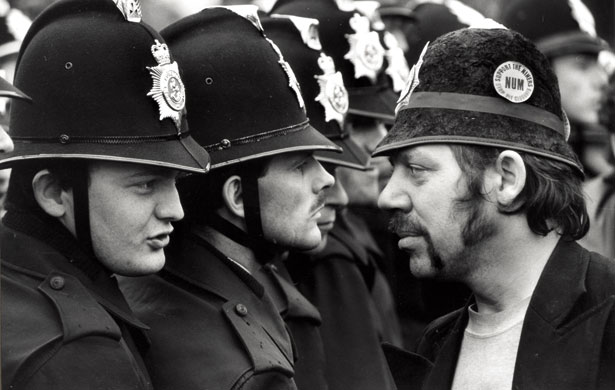
However, over the last year or so, a different aspect of the 1970s is emerging in popular culture. Damned United, the new film about Brian Clough and Red Riding, Frost/Nixon (a film about the Frost/Nixon interviews of 1977) and the recent TV adaption of David Pace’s novels both, in their own ways,both reflect a very view of the ’70s, with a reminder of the shabbiness (physically and socially) of the 1970s and the political complexities of the period. The ‘long 1970s’ from Paris ’68 until the Miner’s Strike of 1984 saw a period of social and political discontent that arose out of the failure of the 1960s hippies to effect change (and the re-politicisation and radicalisation of the left in the events of Paris 68) and was dealt a death blow (in the UK at least) on the picket lines of Orgreave, Ollerton and Ferrybridge. Although the Tory’s came to power in 1979, it was only following the Falkland’s War and the Miner’s Strike that they were secure enough to push through many of their most distructive and radical policies. The local and global problems, Cambodia, Vietnam and Beirut and the rise of Republican violence in Northern Ireland and the appearance of left-wing terrorism (Angry Brigade in Britain; RAF; Action Direct and the Red Brigades in Europe; the Weather Underground and the SLA in the States), as well as considerable labour unrest and the rise of the unions, were ignored as much by punk as by the Bay City Rollers (with the honourable exception of the anarcho-punk movement including such bands as Crass), who as early a 1978 sang ‘I see the velvet zippies in their bondage gear, The social elite with safety-pins in their ear,I watch and understand that it don’t mean a thing,The scorpions might attack, but the systems stole the sting.. ‘

I’m not sure why this interest in the seemier, or at least more mundane side of the 1970s is reviving. Possibly because its now far enough away to be looked at slightly more dispassionately, rather than through the ironic lens of Abba tribute acts (is Mamma Mia a crime against humanity? Discuss). We’ve just had the 25th anniversary of the 84 strike, and whilst the wounds are still deep, it was noticeable in recent coverage, that those involved on the right from tory ministers to police on the front line were much more conciliatory and at least openly acknowledging the social damage done, whilst those on the left are willing to admit that whilst the struggle may have been a just one, the timing of the strike and the decision to proceed without a ballot were badly mishandled by Scargill. An interesting take on the memory of the strike is Jeremy Deller’s 2001 re-enactment of the Battle of Orgreave, one of the key turning points in the strike.

South Downs

Sorry, I know its been ages since I posted, but the joys of essay marking and English Heritage paperwork have been calling.

Anyway, I found this nice little article about the landscape of the South Downs, which has just become the latest National Park. It particularly drew my attention as the article mentioned the Copper Family, who are important as performers of Sussex folk songs, and part of an unbroken family tradition of singing going back to the 19th century. You can see them in action here.

On a vaguely connected tack- I had a rare trip out on Monday when I got to the Spiers and Boden gig at the NCEM in York – a good night out indeed- they also lead the excellent Bellowhead, who I am still trying to catch live (you can see them on Youtube here and with a drubk looking Jon Boden here)

Never mind the pancakes

Yesterday was Shroves Tuesday, the day before the beginning of Lent. For us in England, it generally means PANCAKE DAY!, whilst for many other countries its Carneval (literally- ‘goodbye to meat’); both traditions emphasise the giving up of good food in advance of a time of fasting in the run-up to Easter. However, even within England there are many other traditions connected to the Shrove Tuesday, for example, the playing of Shrove Tuesday football matches was once common. These aren’t ‘soccer’ matches, with equal numbers on each team and pitch. These are full-on, crowd-participation melees played over a large area, sometimes an entire parish. Many of these football traditions declined when the 1835 Highways Act forbade the playing of ball games on the road. However, they still exist in some towns, including Ashbourne Derbyshire. Here are some pictures of yesterday’s match from BBC Radio Derby

Steam dreams


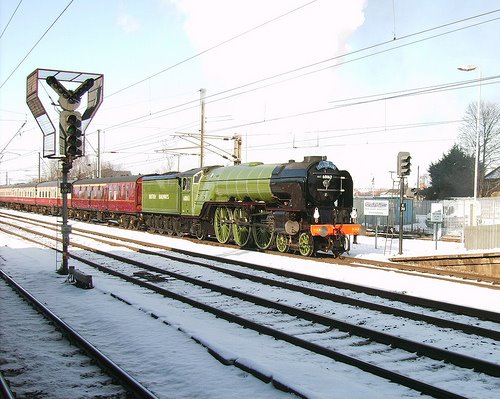
I’ve been pondering stream trains recently. Driving home a few weeks ago we were surprised to see a large crowd of people standing on the railway bridge near us, which goes over the main east coast line. It turned out that they there to watch Tornado, the first new steam train to have been built in Britain for fifty years. Apparently the station was packed, as was the station up at Darlington where it was heading. Then yesterday morning I took Isobel to the National Railway Museum, which is handily just down the road from us. Although we were there at 10.30, within an hour the museum (which is big) was absolutely heaving with families and children. Isobel loved it, which as she comes from a railway family on her mum’s side is presumably genetic.

It got me thinking about the popularity of steam trains in the UK though. As well as the excellent railway museum in York, it now has an outpost in Shildon (Co. Durham), and in the last couple of years a major new museum has opened up in the railway town of Swindon. If anything, stream trains are becoming more popular than ever, which I find fascinating. In the past, the stereotypical steam fan was a weighty fifty-year-old man (almost always a man) who remembered the last days of steam himself and still hankered to be an engine driver. Now the core audience appears to be children; neither they nor their parents are able to remember the glory days of steam, yet we’re still obsessed with it. Obviously, for many of us adults, there is an element of faux-nostalgia for a time and society we don’t remember and probably never existed anyway. It’s no surprise that one of the biggest themes running through the merchandising in the railway museum shop is that of old railway posters, with their imagery of seaside holidays and bucolic countryside. Steam trains evoke a world of Brief Encounter, Miss Marple and Hercule Poirot, Night Mail, the Railway Children and Ivor the Engine, a pre-lapsarian England before Dr Beeching wielded his axe. However, whilst for adults the thought of steam engines might set off this nostalgic riffing, it can’t be true for the children, who presumably just love the steam engines for being big, noisy, smelly and steamy (what’s not to like?).

However, when I’ve travelled abroad I’ve not come across much evidence for the cult of the steam engine in the same way it exists over here. Why is it such a British phenomenon?

More on morris…


Interesting article in Saturday’s Guardian about Mary Neal who is one of the unsung heroines of the folklore revival in the early 20th century, but who made the mistake of getting on the wrong side of Cecil Sharp. Mary Neal was an socialist, suffragette and social worker who used dance as way of encouraging and helping factory girls in London. Her approach to dancing emphasised the fact that dance was a developing tradition and that forms and performance styles could change and evolve over time. This contrasted with Sharp’s highly formalised approach to folk dance which focused on developing a fixed canon of repertoire and was dogmatic about performance style. They fell out and the subsequent hagiography of Sharp more or less wrote Neal out of the story. This is now being remedied though and the EFSDS held their first Mary Neal day on Saturday.

Neal is also interesting for her involvement in the Kibbo Kift, an early version of the Woodcraft Folk (kind of lefty version of the Scout movement), which also involved individuals like Rolf Gardiner (who I’ve blogged about before) whose subsequent career had a distinct right-wing trajectory. The Kibbo Kift also utilised a range of interesting imagery including Anglo-Saxon / Viking ideas and concepts drawn from a 1930s concetpion of Native American life. I hope to come back to this at some point.

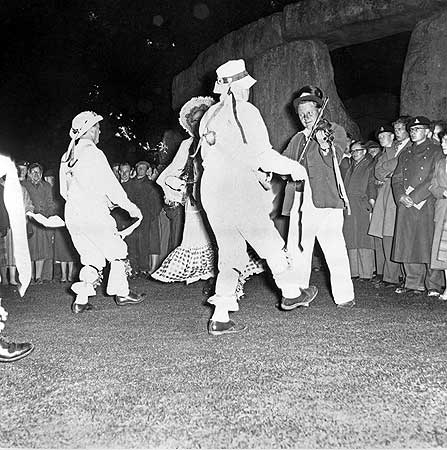
NB: the photo is of morris dancing at Stonehenge in the 1950s taken by RJC Atkinson (the photo is from the excellent English Heritage Viewfinder website)

Romans in Durham


I’ve tended not to blog about my research much. However, I thought would write a little about a major new project I’m closely involved with which looks like it might be playing a big part in my life for the next five years.

I am part of a team from the Department of Archaeology at Durham University and the Department of Classics, Stanford University, planning a major campaign of excavation on the Roman fort at Binchester (Co. Durham). We are going to be carryig out six weeks of fieldwork at the site each year between 2009 and 2014. We are also going to be putting in place a wide range of more non-intrusive strategies (field walking; shovel pitting; geophysical survey; LIDAR etc) which hopes to locate the fort in its landscape context.

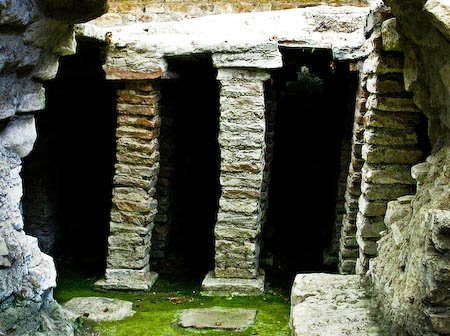
Those of you who know me will be aware that I am not particularly a Romanist (though I have published on Roman material); my heart is really in the early medieval period with a focus on the spread of Christianity. Luckily, Binchester, as well as being a key Roman military installation on the main road between York and Hadrian’s Wall, has also produced significant evidence for the continuation of activity well into the fifth and probably even the sixth century, and went to become a centre of one of the estates owned by the Community of St Cuthbert at Durham.

The project will have its own blog at some point, and I’ll probably put updates on here as well. It’s only just dawning on me what a major undertaking this is going to be!